Ryan Corfixsen
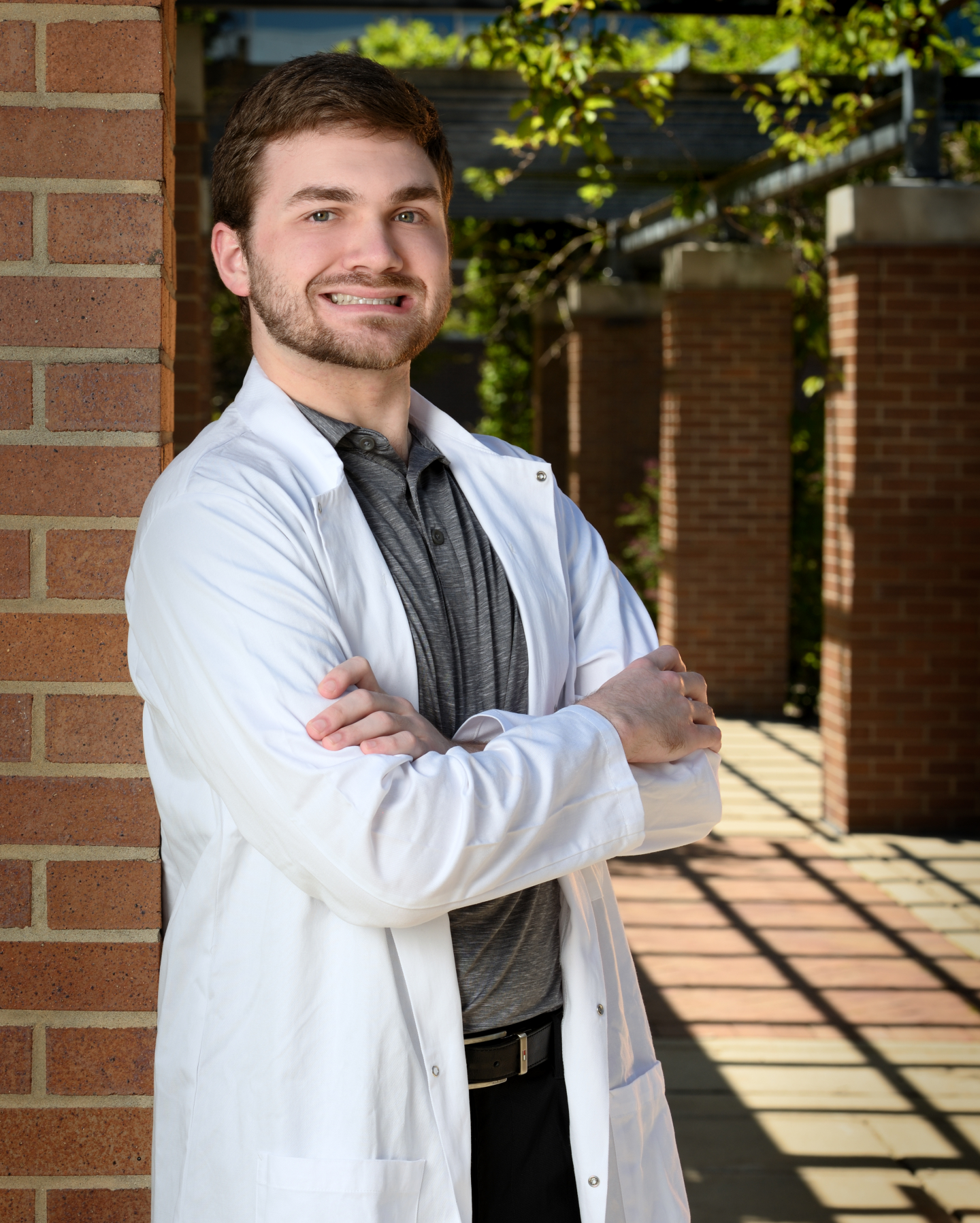
MSU College of Natural Science
More about me:
What is your major and anticipated graduation?
Genetics and Genomics, May 2026
How did you decide to attend MSU?
I wanted to stay in-state, and I only applied to a handful of universities, but MSU provided something none of the others did; a feeling of community. From the schools I toured, MSU had an atmosphere that felt familiar and comfortable like no other university I toured. I was really able to visualize myself attending and being successful at MSU during that moment, which was especially important to me. In addition to the vast catalog of programs offered at MSU for someone with only a rough idea of what they wanted to do with their life, the choice was clear.
How did you select your major?
I was originally a computer science major with an emphasis on game design, but I soon realized that path wasn’t meant for me. In the midst of browsing majors and courses at MSU, I stumbled across the bioinformatics program and contacted the program director to obtain more information. After that meeting, I knew I needed to go back to my roots in science and pursue a degree in biological sciences with computational applications. I soon encountered the Genetics and Genomics major which seamlessly blended my passion for biology, specifically genetics, and my prowess with computational practices.
Can you describe your research?
My current research employs mouse models of breast cancer to investigate the molecular mechanisms of involution, the process in which the mammary gland reverts from a pregnancy phenotype to a virgin-like phenotype.
What is the societal impact of your research?
Breast cancers occurring in mothers within 10 years after giving birth plague between 150,000-350,000 young women each year. These young mothers also present a higher rate of metastases and death compared to non-mothers and older women. This large subset of breast cancer coincides with involution, which has been shown to promote an ideal environment for tumors to develop. By exploring the mechanisms of involution through genetic sequencing, we aim to uncover the genes expressed during involution to further develop our understanding of postpartum breast cancer.
How has your undergraduate experience been impacted by research experience?
My undergraduate research experience has been life changing. It helped me clarify my career goals, exposed me to a global community of scientists, and gave me opportunities to travel, present, and engage in meaningful scientific discussions. Research has shaped me as a scientist in ways that coursework alone could not, providing an outlet to apply my knowledge to collaborative, real-world projects. It has strengthened my critical thinking, deepened my curiosity, and helped me grow both academically and personally. I’m extremely grateful for these experiences—without them, I truly don’t know where I’d be today.
Of everything you have experienced at MSU, what has surprised you the most/what is something you never expected?
Of everything I’ve experienced at MSU, I was the most surprised by the sheer amount of resources offered to students. I’ve personally used some of the resources provided by the Office of Undergraduate Research to obtain my current research position. The university also offers plenty of other resources including tutoring, transportation, and scholarship opportunities.
Plans after graduation?
After graduating, I anticipate I’ll go on to graduate school for my PhD in biomedical research with an emphasis on cancer mechanisms and therapeutics.
How important is this scholarship to you personally and to your future career?
The Dean’s Research Scholar award is one of the most significant recognitions of my commitment to research I’ve ever received, and a valuable step toward my goal of pursuing a PhD in cancer biology. It affirms the work I’ve done integrating computational and wet-lab approaches to study breast cancer, while also motivating me to continue developing as an independent scientist. This scholarship would not only support my current projects, but also strengthen my future applications and opportunities in academic research. Lastly, joining the cohort of Dean’s Research Scholars has allowed me to share more about my own research, and hear about the research being done by my peers.