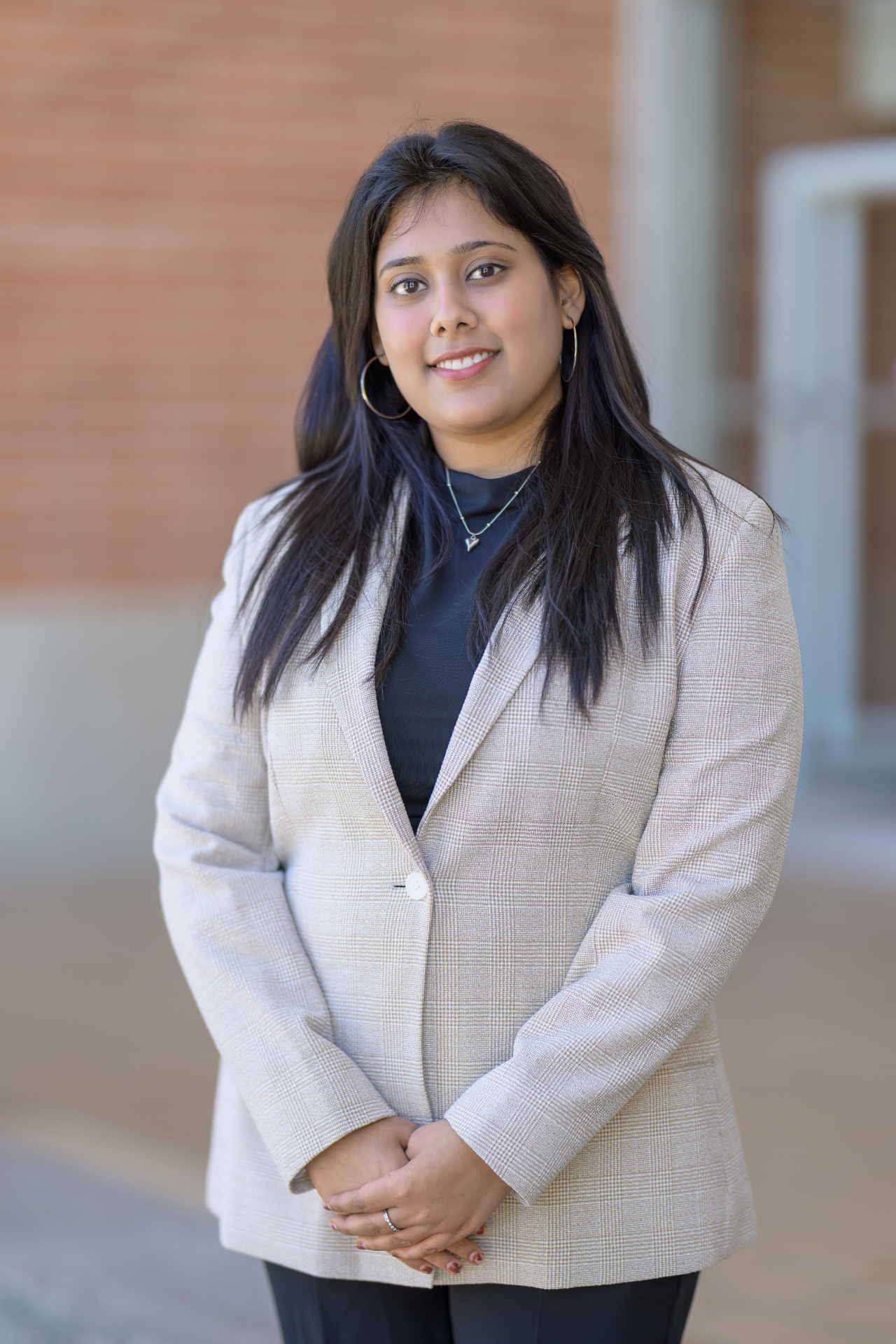
Purvi Garg
MSU College of Natural Science
More about me:
What is your major and anticipated graduation?
Astrophysics and Data Science, May 2026
How did you decide to attend MSU?
In my final year of high school, while at boarding school, a simple twist of fate changed everything—I followed a group of students heading to the counselor’s office, not knowing it would open the door to studying in the U.S. When MSU later offered me admission, I was captivated by its renowned astronomy program, the planetarium, the observatory, and the chance to learn from some of the most inspiring minds in the field. It felt like the universe was aligning in just the right way.
How did you select your major?
During my high school years, particularly as a junior and senior, a certainty took hold of me – a realization that I was destined for astrophysics. The excitement of learning about stars and the mysteries of space were areas I was eager to dive into To me, selecting a major was a declaration of passion, an affirmation that I would follow my zeal rather than simply seeking a means to a livelihood.
Can you describe your research?
In the early days of our solar system, tiny building blocks of planets—called planetesimals—formed when clouds of pebbles collapsed under gravity. Sometimes, two of these objects ended up orbiting each other, creating what we call a binary system. My research explores what happens to these pairs over time: do they stay together in stable orbits, crash into each other, or drift apart?
To find out, I use a special computer program(GUBAS) that simulates their motion over thousands of years. By comparing these simulations to real observations of space rocks in the distant Kuiper Belt, I’m helping answer why we don’t see as many of these pairs today as models suggest we should—and what that tells us about how the solar system formed and evolved.
What is the societal impact of your research?
While my research focuses on distant space rocks, its societal value lies in how it deepens our understanding of planetary origins, which is foundational to both science education and future space exploration. By unraveling how the early solar system evolved, we contribute to the broader human quest to understand where we come from and how planetary systems—including potentially habitable ones—form throughout the universe. This inspires curiosity, supports STEM learning, and informs missions that explore asteroids for science and potential resources.
How has your undergraduate experience been impacted by research experience?
My time at MSU has reshaped how I view both astronomy and research as a whole. I learned that research is not an isolated task but a collaborative process built on shared curiosity and teamwork. As a research assistant, I found purpose in studying the early history of our solar system and understanding how small planetary building blocks evolve over time. Presenting our work at conferences like the Conference for Undergraduate Women in Physics, the Data Science Conference, and UURAF helped me grow not just as a researcher, but also as a science communicator—translating complex ideas into clear, engaging messages for broader audiences.
Of everything you have experienced at MSU, what has surprised you the most/what is something you never expected?
The most unexpected part of my journey at MSU has been how captivating astrophysics turned out to be. People often say it's tough and many students quit by their junior year. It's true—it's not easy, but the professors here make it so engaging that by the time I finished my sophomore year, there was no turning back for me. I've become deeply passionate about it, more than I ever thought I would, and now I'm committed to reaching the highest peaks of education in astrophysics.
Plans after graduation?
To attend graduate school to pursue a Ph.D. in astrophysics.
How important is this scholarship to you personally and to your future career?
Being selected as a Dean’s Research Scholar would allow me to share the exciting work we're doing at MSU on early solar system formation with a broader audience. I’m passionate about science outreach—translating complex ideas like planetesimal evolution into something accessible and inspiring for people from all backgrounds. This opportunity aligns with my long-term goal of mentoring and educating future students in astronomy and physics. The recognition and financial support from this scholarship would not only ease my academic journey but also give me the freedom to deepen my research and contribute meaningfully to the scientific community.